American Society of Ichthyologists and Herpetologists

The American Society of Ichthyologists and Herpetologists (ASIH) is dedicated to the scientific study of fishes, amphibians, and reptiles. The primary emphases of the Society are to increase knowledge about these organisms, to disseminate that knowledge through publications, conferences, symposia, and other means, and to encourage and support young scientists who will make future advances in these fields. The programs of the American Society of Ichthyologists and Herpetologists are part of a global effort to interpret, understand, and conserve the Earth's natural diversity and to contribute to the wise use of natural resources for the long-term benefit of humankind.
Learn more About the Society, review our Professional and Student Awards, and find out how you can Become a Member.
2022 ASIH Public statement of Commitment to Diversity, Equity, Inclusion, & Belonging (DEIB).
2025 ASIH EXEC Public statement (pdf) on recent attacks on diversity, equity, and inclusion initiatives.

ASIH publishes Ichthyology & Herpetology, a respected international journal publishing original research on extant and extinct fishes, amphibians, and reptiles. Learn more…
ASIH Monthly Newsletter
Care to add “Community News” to the monthly newsletter? Use this Google Form curated by President Dustin Siegel. Visit our News page for up-to-date information.
Next JMIH Meeting: Westin Playa Bonita, Panama City, Panama 21-21 July 2027
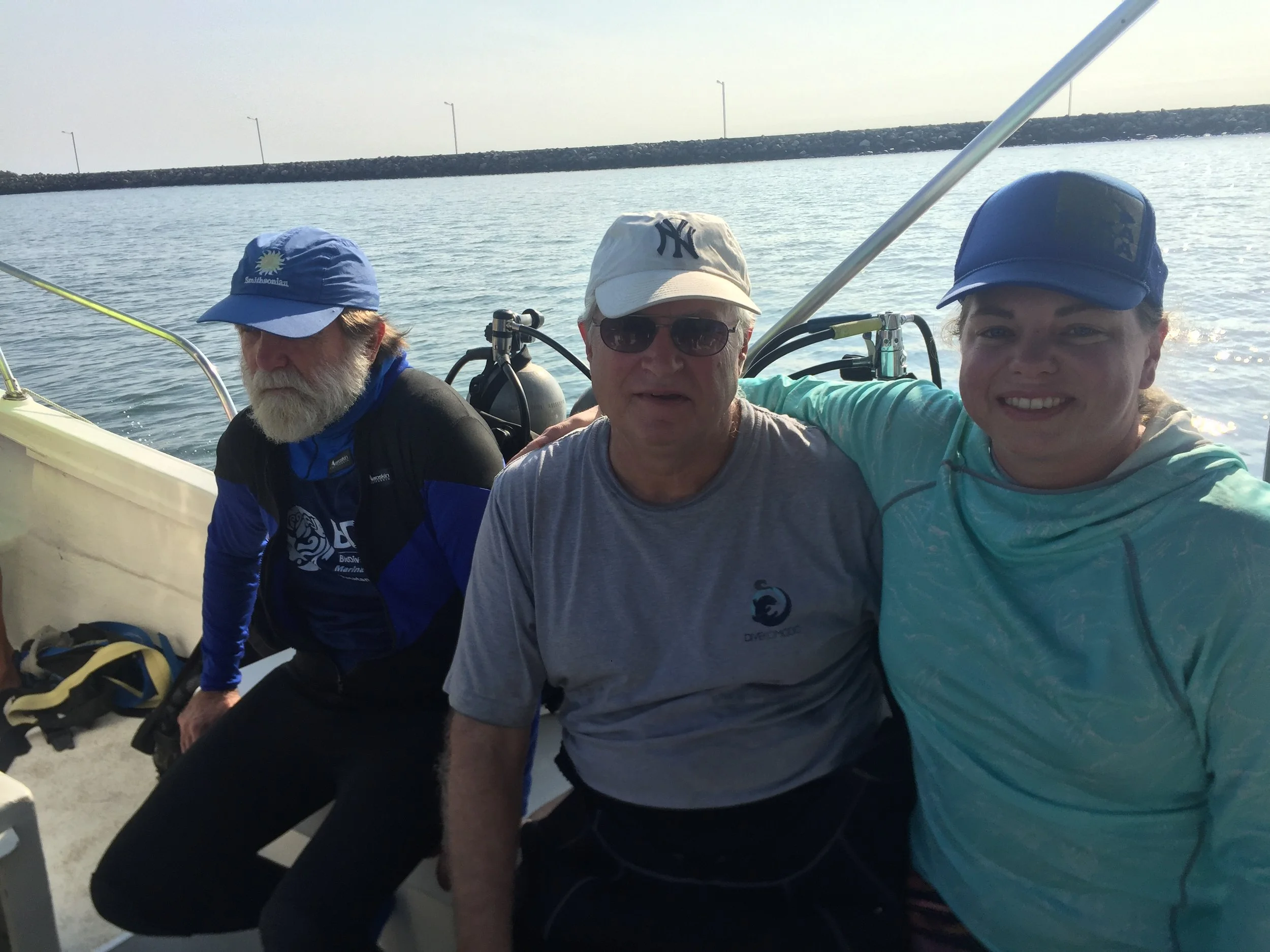
Ross Robertson, Kent Carpenter, and Christi Linardich during a dive trip in Veracruz, Mexico in 2018
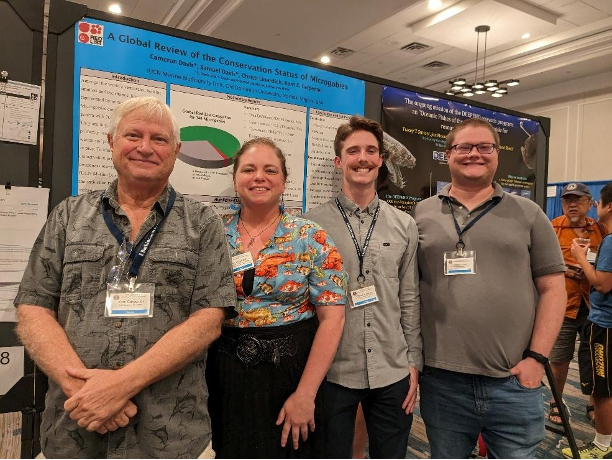
2023 Joint Meeting of Ichthyologists and Herpetologists in Norfolk, Virginia. Here is Kent and Christi supporting great research on the conservation status of microgobies that two undergraduate students, Cameron and Sam, presented during the poster session. We all still work in the Carpenter lab to this date. From left to right: Kent Carpenter, Christi Linardich, Cameron Davis, Samuel Davis. Photo by Christi Linardich
Tribute to Dr. Kent Carpenter (1952-2026)
18,000 bottles of fish on the wall, take one down and pass it around, 17,999 bottles of fish on the wall: A tribute to Dr. Kent Edward Carpenter (1953-2026)
By: Christi Linardich, Co-Manager IUCN Marine Biodiversity Unit, Old Dominion University, Norfolk, Virginia, USA
There are about 18,000 bony fishes in the world's oceans, and Kent Carpenter wanted to hold, observe, and understand every single one. Under his life-altering mentorship, his think-global mindset was rare and relentlessly eye-opening. By the time I finished my master's thesis in 2016, it resembled a PhD dissertation. Kent maintained what amounted to two lifetimes of science: one lab on genetics and systematics of fishes, another on extinction risk of marine species. His workaholism was inspired by his PhD advisor, the late Jack Randall, though Kent would tell you he never worked a day in his life because he loved it so much. He had a retirement plan in motion set to take effect about two months after his death, but only in title. As emeritus professor, he intended to keep supporting his research staff and to continue his dream project on fishes of Tubbataha Reef.
Kent was the kind of fish nerd who could walk into a museum collection and navigate easily to the fusilier fishes, of which he was the world's expert on. He was especially excited about his "genetic time travel in Philippine fishes" project, comparing DNA from 100-year-old Smithsonian specimens, collected during early U.S. expeditions, to fish he gathered from those same Philippine sites a century later to track how population genetics shifted as overfishing and environmental degradation took hold. Results are already emerging in print, with more to come. Watching reef abundance erode over his lifetime turned Kent into a diplomat-crusader for ocean conservation. In 2005, he took on the terrestrial bias of the IUCN Red List and launched the Global Marine Species Assessment initiative, aiming to publish 20,000 marine assessments. Twenty-one years later, the IUCN Marine Biodiversity Unit is nearing 80% of the world's marine bony fish assessments, including 4,000+ neotropical species. Kent personally assessed over 1,600 species, second only to his friend Jeffrey T. Williams.
The final line of The Lorax has long been my mantra for my 14-year work history with Kent: "UNLESS someone like you cares a whole awful lot, nothing is going to get better. It's not." I didn't get that from Dr. Seuss — I got it from Kent. We will carry on his legacy, but it will take all of us passing along the next proverbial bottle of fish on the wall. In honoring Kent’s memory, I maintain the hope that you too will speak for the fishes but also the trees and the birds and the corals and the bees and too many other species that cannot possibly fit within this concluding statement. Kent, after all, detested run-on sentences.